
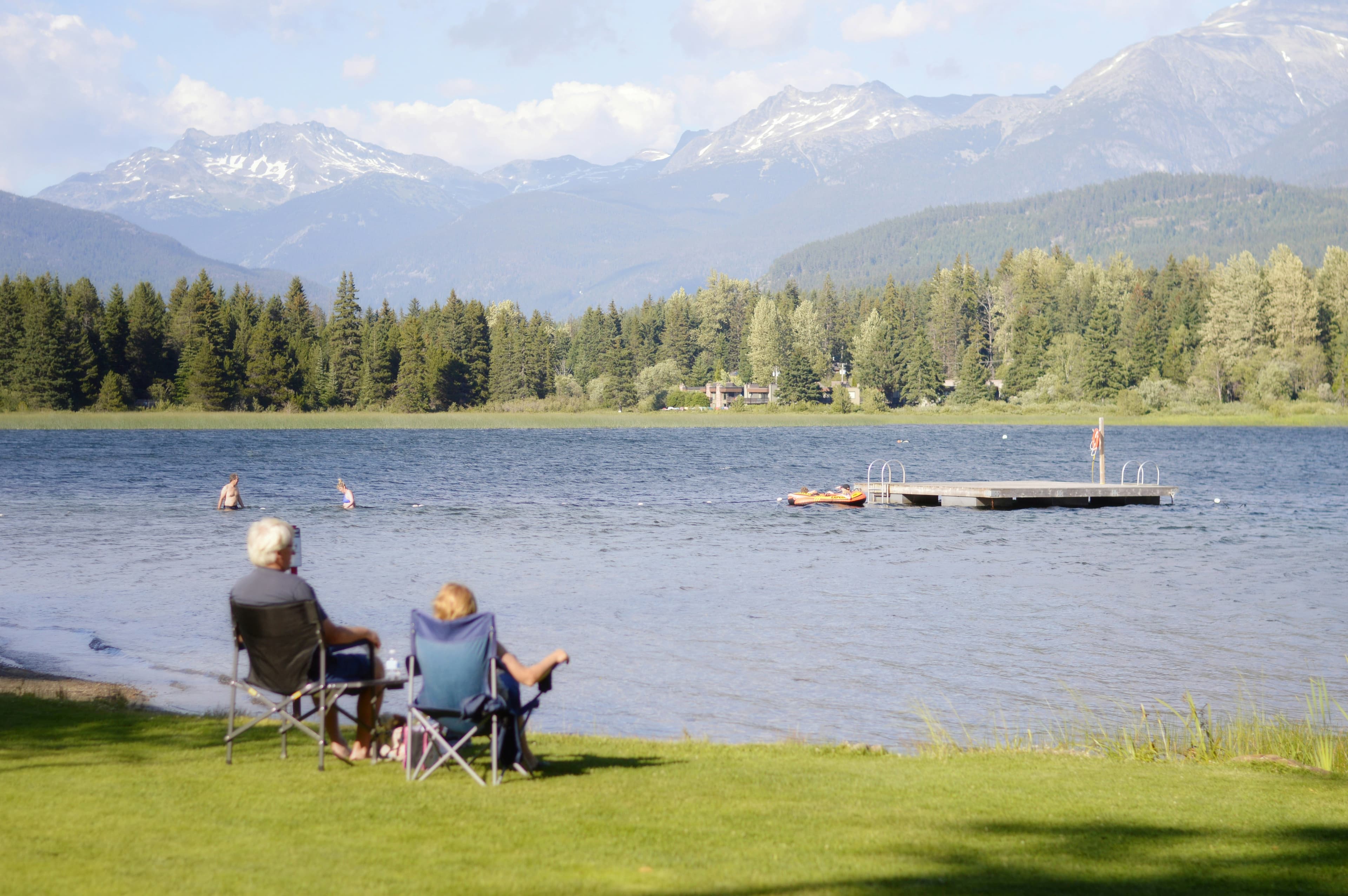

- There is no single best place to retire. The right location depends on how you prioritize cost of living, taxes, healthcare, and lifestyle.
- Provincial income taxes vary. Two retirees with identical savings can end up with very different after-tax incomes depending on where they live.
- The better question to ask: where does your retirement income go furthest while still giving you the lifestyle you want?
For most of our working lives, home is where our family and our work is. But when children grow up and fly the coop, and you finally retire, you might wonder what's left to keep you here.
For some Canadians, the answer is simple. Stay where you are, close to family and community. For others, retirement becomes an opportunity to rethink lifestyle from the ground up. Across Canada (and beyond!), there are real differences in cost of living, housing, provincial taxes, and healthcare access that can shift the financial picture significantly.
What Actually Matters in a Retirement Location
Before looking at specific cities or regions, it helps to think through the decision-making factors for most retirees.
1. Cost of Living
This is usually the dominant factor. Key considerations include:
- Housing: whether you own or rent, property taxes, and how far your savings can go in different markets
- Day-to-day expenses: groceries, transportation, utilities, and services
- Whether a car is required: car ownership easily adds $10,000–$15,000 per year for many households; walkable or transit-connected areas cut this considerably
A location's cost of living reflects the total expense of maintaining a given standard of life: housing, food, transportation, utilities, and services. For retirees on a fixed income, cost of living matters more than for working households because income is relatively fixed while expenses can vary dramatically by location and over time. A lower-cost region can effectively increase your purchasing power.
2. Healthcare Access
As retirees age, proximity to reliable healthcare becomes increasingly important. This means access to family doctors, hospitals, specialists, and eventually long-term care options. Rural and remote areas often face family doctor shortages and longer wait times for specialist care.
3. Provincial Taxes
Provincial income tax rates differ across Canada, and those differences affect how much of your retirement income you actually keep.
Each province sets its own income tax rates, applied on top of the federal rate. For retirees drawing from CPP, OAS, RRIFs, and pensions, provincial tax differences can add up to thousands of dollars annually on the same income. Quebec has the highest combined rates for many brackets; Alberta has no provincial sales tax and relatively low income tax rates. The difference is real money over a 20-30 year retirement.
The contrast between provinces is sharper than most people realize:
Alberta sits at the low end. The province charges a flat 10% provincial income tax on the first $151,234 of income, with no provincial sales tax on top (you only pay the 5% federal GST). For a retired couple drawing $80,000 combined from CPP, OAS, and RRIF withdrawals, the provincial tax bill in Alberta is about as low as it gets in Canada.
Quebec sits at the other end. Provincial rates start at 14% on the first ~$51,000 of income and climb to 19%, then 24%, then 25.75% at higher levels. Quebec has its own credit system that partially offsets this, but for most retirees the effective provincial rate will be noticeably higher than in Alberta or Ontario.
British Columbia and Nova Scotia fall in the middle-to-high range, with provincial rates that can reach 14–20% depending on income.
On $70,000 of retirement income, the provincial tax difference between Alberta and a higher-tax province like Quebec or Nova Scotia can easily exceed $3,000–$5,000 per year. Over a 25-year retirement, that gap compounds. And it doesn't include the sales tax savings.
Two retirees with identical CPP, OAS, and RRIF income can end up with very different after-tax outcomes depending solely on province. Run the numbers before committing to a location.
4. Lifestyle Preferences
This is the most personal factor, and often the most important, and the one most people underestimate when they start running spreadsheets.
Climate is the obvious one. Victoria sees cherry blossoms in February and rarely dips below zero; Winnipeg can hit -30°C in January. Retirees who hate winter and have the financial flexibility should take the climate question seriously. Spending four months a year hating the weather where you live is a real quality-of-life cost.
Urban versus small-town shapes daily life more than most people anticipate. A city like Calgary or Halifax offers hospitals, cultural venues, restaurants, and airports within easy reach. A smaller community like Wolfville, NS or the Comox Valley offers quiet, community, and often cheaper real estate, but you may be driving 45 minutes for a specialist appointment or a decent concert or restaurant.
Proximity to family is what drives relocation decisions for many retirees. Being close to grandchildren or aging parents has real value that does not show up on a tax spreadsheet. If this is important to you, then you should plan your retirement with location as a core assumption.
Social infrastructure matters more with each passing decade of retirement. Retiree communities, recreational clubs, cultural events, and volunteer opportunities are not just luxuries. They keep people engaged, healthy, and fill a human social need. When considering where you want to live long term, check to see if your region has the communities or groups you're looking for.
Outdoor recreation access varies dramatically. Ocean kayaking in BC, skiing in Alberta, cycling in PEI, cottage lake life in Ontario. What you want to do in retirement should factor into where you choose to do it.
Popular Retirement Regions in Canada
Rather than declaring a winner, here is what draws retirees to different parts of the country, and what the honest trade-offs are.
British Columbia: Especially Vancouver Island
Picture this: it's February. Your friends in Toronto are shovelling their driveways for the fourth time this week. You are having coffee on a patio in Victoria, watching a heron on the waterfront while your garden (yes, your outdoor garden) has something blooming in it.
That is the pitch for Vancouver Island. Victoria, Nanaimo, the Comox Valley, and Parksville-Qualicum draw retirees from across the country for good reason: mild year-round climate, dramatic coastal scenery, excellent cycling and hiking, and one of the highest concentrations of retiree communities in Canada. Victoria has a reputation as one of the most walkable cities in the country, somewhere you can actually age in place without a car.
BUT: housing costs are high by national standards, and BC's provincial income tax rates are not the friendliest for middle-income retirees. For those downsizing from a high-value Ontario or Vancouver home, the math often works. For those moving without significant home equity to deploy, it takes more planning.
Ontario: Smaller Cities and Lake Regions
Ontario's retiree story is not about Toronto. It's about everything else. Prince Edward County with its wineries, artisan food scene, and limestone shores. The Kawarthas with a thousand lakes and a cottage-country-permanent-residence lifestyle. Collingwood and the Blue Mountains for four-season recreation. The Niagara Peninsula for wine, culture, and a mild (by Ontario standards) microclimate.
Ontario's healthcare infrastructure is its strongest card. Access to the country's largest hospital networks, specialist services, and long-term care options is hard to match anywhere else. For retirees who want serious healthcare close by, Ontario is the safe bet.
BUT: winters range from manageable to brutal depending on the region, and Ontario's income tax rates sit in the middle of the national pack, not punishing, but not a competitive advantage either. Housing in desirable lake regions has gotten pricier as remote work and pandemic-era migration drove demand.
Wondering what an Ontario retirement actually costs? Our $1 million case study follows a retiree in Sudbury, with her full monthly budget and tax bill.
Atlantic Canada
Atlantic Canada is having a moment, and retirees are a big reason why. Lower housing costs, a slower and more neighbourly pace of life, and scenery that would make a tourism board weep have made it one of the fastest-growing destinations for retirees from central Canada.
Cape Breton is a standout: dramatic highland scenery, Celtic roots, a thriving music and arts culture, and communities where people still know their neighbours. Prince Edward Island offers red sand beaches, an overwhelmingly friendly local culture, some of Canada's best dining (fresh lobster is not a luxury here; it's Tuesday), and real estate prices that feel almost absurdly affordable if you are coming from the GTA. The New Brunswick Fundy Coast has some of the world's most dramatic tidal scenery, plus small cities like Moncton, Saint John, and Fredericton that punch well above their weight for amenities and liveability.
BUT: rural healthcare access is a real issue in some parts of the region, and services that urbanites take for granted can require a drive. Weather in Nova Scotia and Newfoundland is unpredictable. The coast is beautiful, but the Atlantic does not apologize for itself in January. And if proximity to family in central Canada matters, the distance is real.
The Prairie Provinces
The Prairies do not get nearly enough credit in retirement conversations, and that is largely their own fault for not bragging about it. Alberta is one of the financially smartest places in Canada to retire: no provincial sales tax, a flat 10% provincial income tax on the first $148,000 of income, and some of the country's most affordable housing outside the inner city.
Calgary and Edmonton have arts scenes, excellent dining, international airports, and some of Canada's best hospitals. For retirees who want urban access without urban prices, Calgary deserves serious consideration. And for those who want to ski world-class mountains on a Tuesday morning without airport chaos, the proximity to Banff and Jasper is a real lifestyle perk.
Saskatchewan and Manitoba offer similar cost-of-living advantages with smaller urban centres. Saskatoon and Regina have invested heavily in arts and cultural infrastructure. Winnipeg, often unfairly maligned, has a rich cultural identity, excellent cycling infrastructure, and a festival culture that locals are fiercely proud of.
BUT: the winters are cold. Not "Canadian cold." Actually cold. If temperature is a dealbreaker, the Prairies will test you. And for retirees coming from Toronto or Vancouver, the transition to a mid-sized prairie city takes real adjustment.

Wondering how a location change would affect your retirement income?
Scenario Lab+ lets you model your full retirement income plan so you can see how much income you'll need, and how different withdrawal strategies affect your bottom line, regardless of where you choose to live.
Try Scenario Lab+A Better Way to Frame the Decision
One of the most common mistakes in retirement location planning is focusing on lifestyle while underestimating the financial implications. Your retirement income does not change when you move provinces. But your taxes do. Your housing costs do. Your healthcare access does. The same retirement plan can produce a very different lived experience depending on where you are.
This is worth thinking about carefully, because small financial differences compound over a 25-year retirement. A province that costs an extra $4,000 per year in taxes can easily cost $100,000 over 25 years (before factoring in missed investment gains). That is real money that could fund travel, support family, or simply extend how long your savings last.
So instead of asking: "Where is the best place to retire in Canada?"
Ask: "Where does my retirement income go furthest while still giving me the lifestyle I actually want?"
A retiree who values proximity to grandchildren above all else will get to a different answer than one who values mild weather and low costs. Neither answer is wrong, but the financial math behind each choice is worth modelling explicitly.
Understanding what your income needs to support comes first. Once you know your number and your priorities, the geography becomes much easier to evaluate.
Bottom Line
There is no universally best place to retire in Canada. But there are clearly regions that align better with different combinations of priorities, whether that's affordability, climate, healthcare proximity, or access to family.
The most important first step is not choosing a city. It is understanding what your retirement income can actually support, so that when you evaluate locations, you are choosing between realistic options rather than aspirational ones.
Use our free Retirement Income Calculator to get a grounded estimate of what you will need, or explore how your full income picture (including CPP, OAS, RRIF, and savings) plays out over a 25-year timeline with Scenario Lab+.

Know Your Number Before You Choose a Location
Scenario Lab+ models your full retirement income across CPP, OAS, RRIF withdrawals, and savings, so you can make a location decision based on what your plan can actually support.
Start now