


The short answer
- Not quite: Angela's pension and $350,000 cover $4,800 a month until she's 81, because her pension isn't indexed to inflation.
- The same pension, fully indexed, would last her to 95 with $162K to spare.
- Working two more years, to 62, fixes her plan. Taking the commuted value doesn't.
Estimates from Scenario Lab+, in today's dollars.
See the demo planA workplace pension is the closest thing to a guaranteed retirement most Canadians get. But "guaranteed" usually means a fixed number of dollars. Unless the pension rises with inflation, every year it buys a little less, and over a 35-year retirement that adds up.
Here at Loonie Nest, our mission is to provide free and affordable personal finance education to Canadians so they can gain confidence in their retirement.
Angela's plan at a glance
$350,000
saved at 60
RRSP
$200,000
Taxed as income when withdrawn
TFSA
$120,000
Withdrawals are tax-free
Cash
$30,000
Withdrawals are tax-free
Spending after tax, in today's dollars
$57,600
$51,840
$46,080
CPP $1,000 a month from 65
OAS $742 a month from 65
Our Pension Retirement Scenario
Let's meet Angela. She's 60, single, and living in Lethbridge, AB. She spent 30 years as a medical lab technologist at a hospital, and she's ready to retire with a workplace pension and some savings beside it. She has two decisions in front of her: whether to keep her pension or take its value as a lump sum, and whether her plan holds up into her 80s.
We'll run Angela's numbers through Scenario Lab+.
Scenario Lab+ is our proprietary retirement planning software. We'll use it to generate and review a tailored retirement plan for her.
To start, here's how Angela's numbers look as she retires at 60:
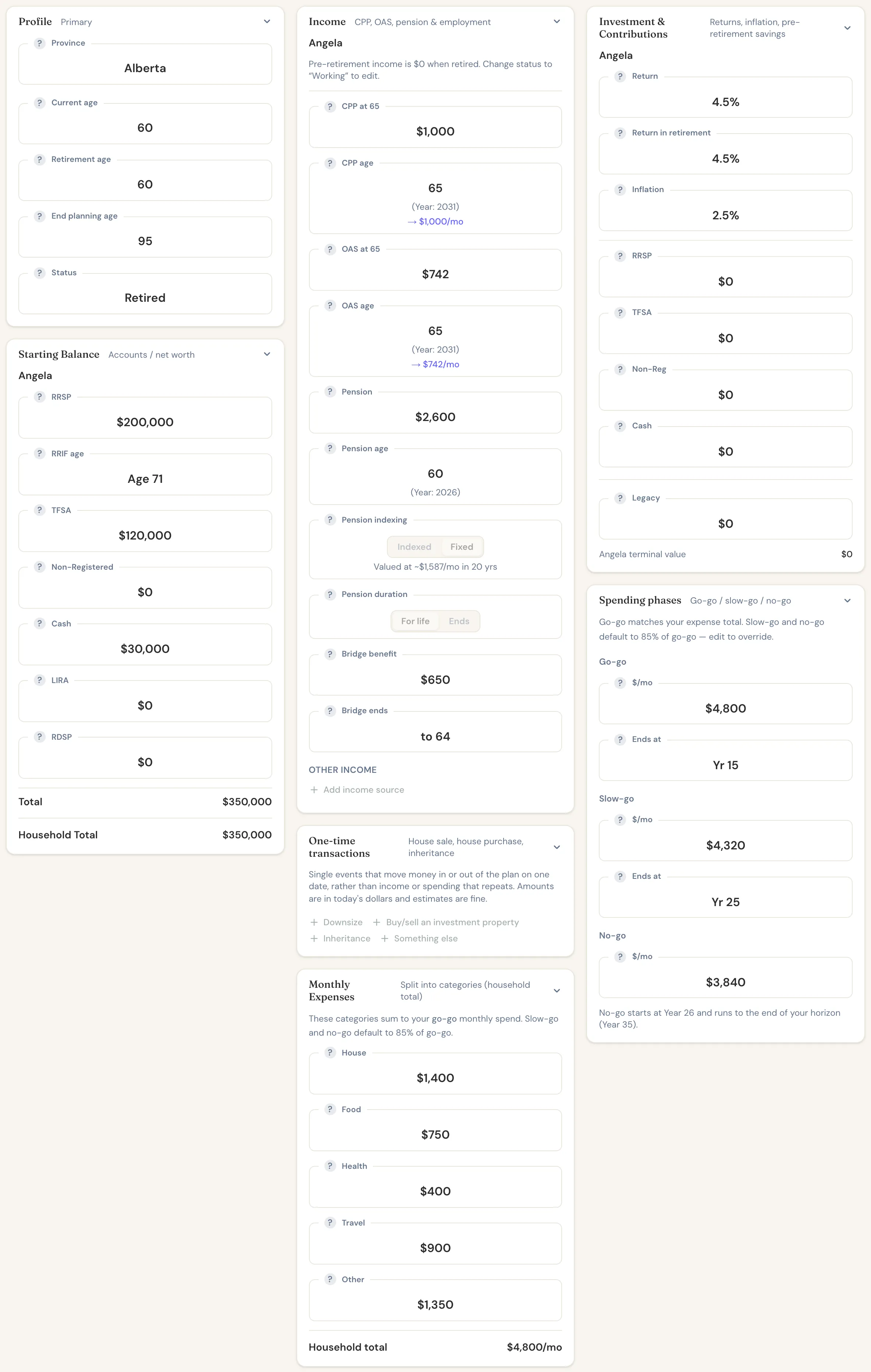 Angela's plan inputs: her profile, pension, account balances, CPP and OAS, and monthly spending.
Her pension pays $2,600 a month for life, plus a $650 bridge until 65. A bridge benefit tops up an early pension until CPP and OAS start. Her pension is not indexed: it pays the same $2,600 in every year. These figures are an example, not any particular plan's. In Scenario Lab+, the pension inputs take the amount, the start age, a bridge and its end age, and whether the pension is indexed.
$350,000 of savings. She has $200,000 in her RRSP, $120,000 in her TFSA, and $30,000 in a savings account.
Angela's CPP is $1,000 a month at 65. She gets the full OAS at 65 too. If you want a refresher on how both programs work, see our guide to CPP and OAS.
Her spending falls as she ages. Her plan starts at $4,800 a month and steps down at 75 and again at 85. In Scenario Lab+, these steps are the plan's Spending Phases.
A few other important assumptions: all figures are in today's dollars, Angela owns her home with no mortgage, she expects her investments to grow 4.5% a year, inflation runs at 2.5% a year, and we plan her retirement to age 95.
Angela's retirement budget
| Category | Monthly | Annual |
|---|---|---|
| Housing (property tax, utilities, insurance, upkeep) | $1,400 | $16,800 |
| Food and dining | $750 | $9,000 |
| Health and dental | $400 | $4,800 |
| Travel | $900 | $10,800 |
| Everything else (car, gifts, entertainment) | $1,350 | $16,200 |
| Total | $4,800 | $57,600 |
Is a Pension Enough to Retire at 60?
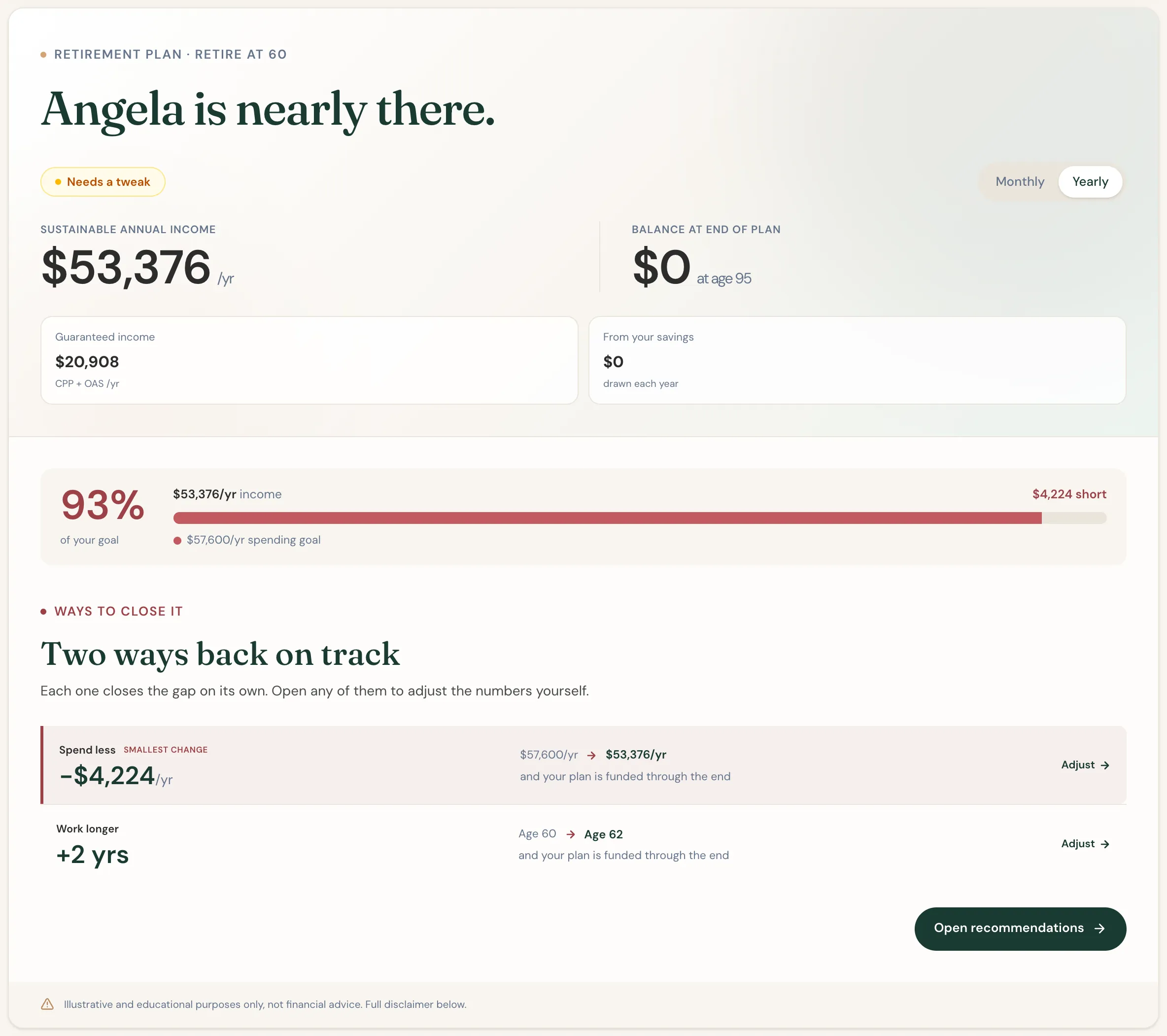 Scenario Lab+'s results for Angela's plan.
Not at this budget. Scenario Lab+ estimates Angela's savings run out at 81. From then on she has her pension, CPP, and OAS, about $39,900 a year in today's money at 82, and falling.
In her first year her pension and bridge pay $39,000, about two thirds of what she spends, and she draws the rest from her savings. That looks comfortable. The problem is what happens to the pension over the next twenty years.
What Inflation Does to Her Pension
All the figures in Scenario Lab+ are in today's dollars, so a pension that doesn't rise with inflation shows up as one that shrinks.
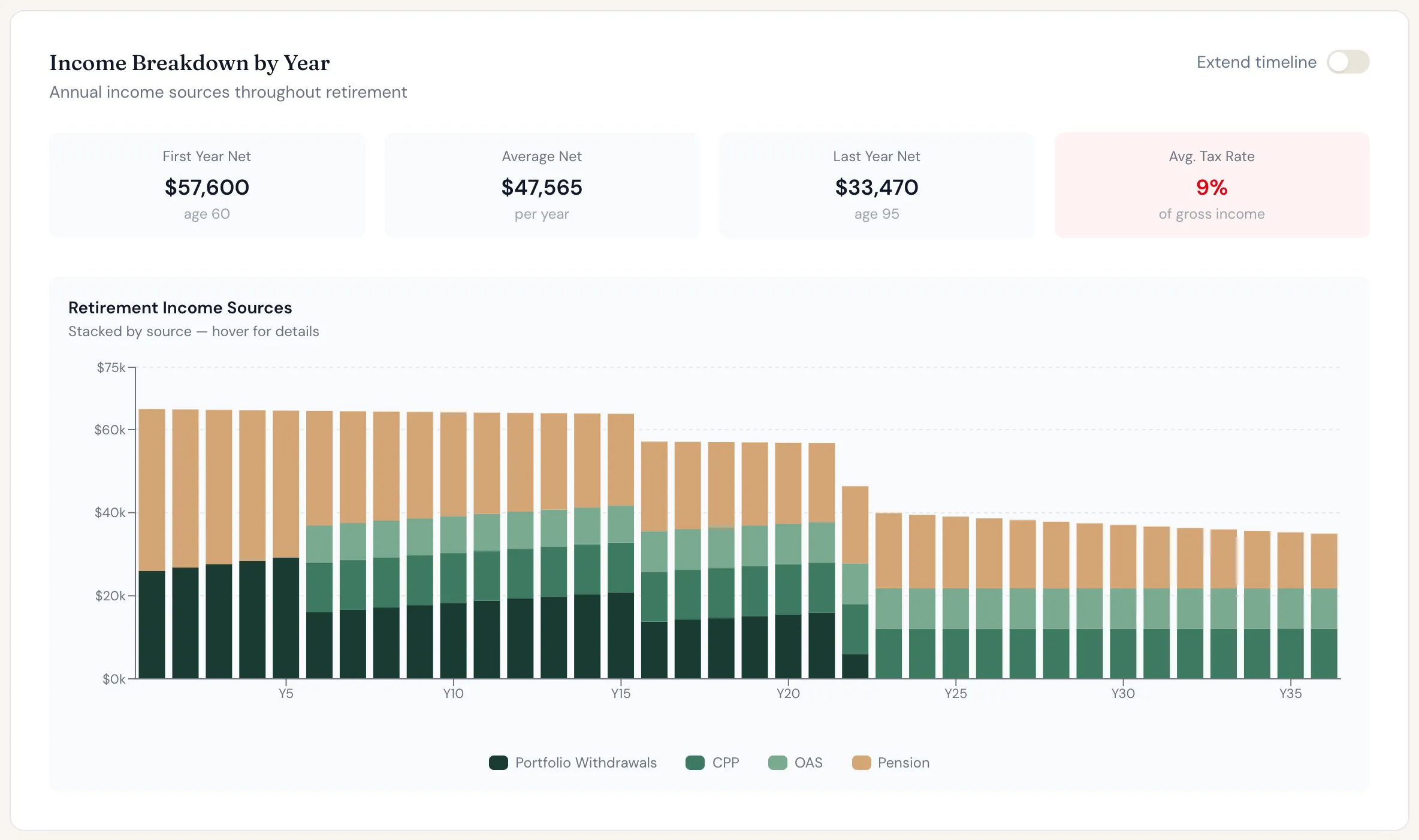 Where Angela's income comes from each year, by source.
| Age | Pension and bridge, in today's dollars |
|---|---|
| 60 | $39,000 |
| 65 (bridge ends) | $27,576 |
| 70 | $24,373 |
| 80 | $19,041 |
| 90 | $14,875 |
By 80, her $2,600 a month buys what about $1,590 does today. Her savings have to cover a bigger share of her spending every year, and they run out at 81.

Does your pension rise with inflation?
Scenario Lab+ models your pension as it's actually paid, indexed or not, alongside your savings, CPP, and OAS.
Try Scenario Lab+How Much Tax Angela Pays
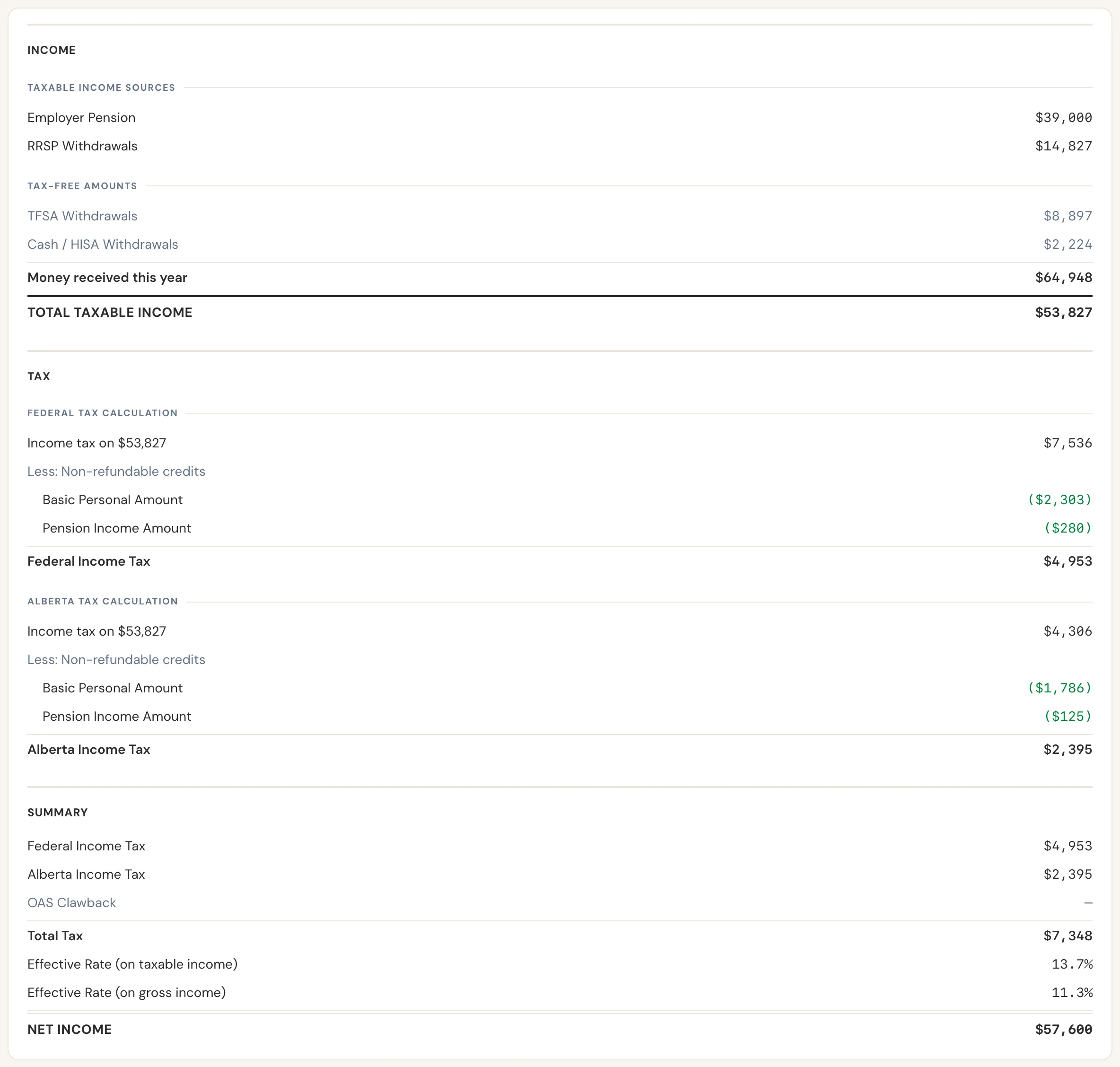 Angela's tax bill in her first year of retirement, at age 60.
Angela pays $7,348 in income tax in her first year, about 11% of her income. Her pension is fully taxable, and so are her RRSP withdrawals. Pension income from a workplace plan also qualifies for the pension income credit at any age, which lowers her bill a little.
How Her Plan Changes Over Time
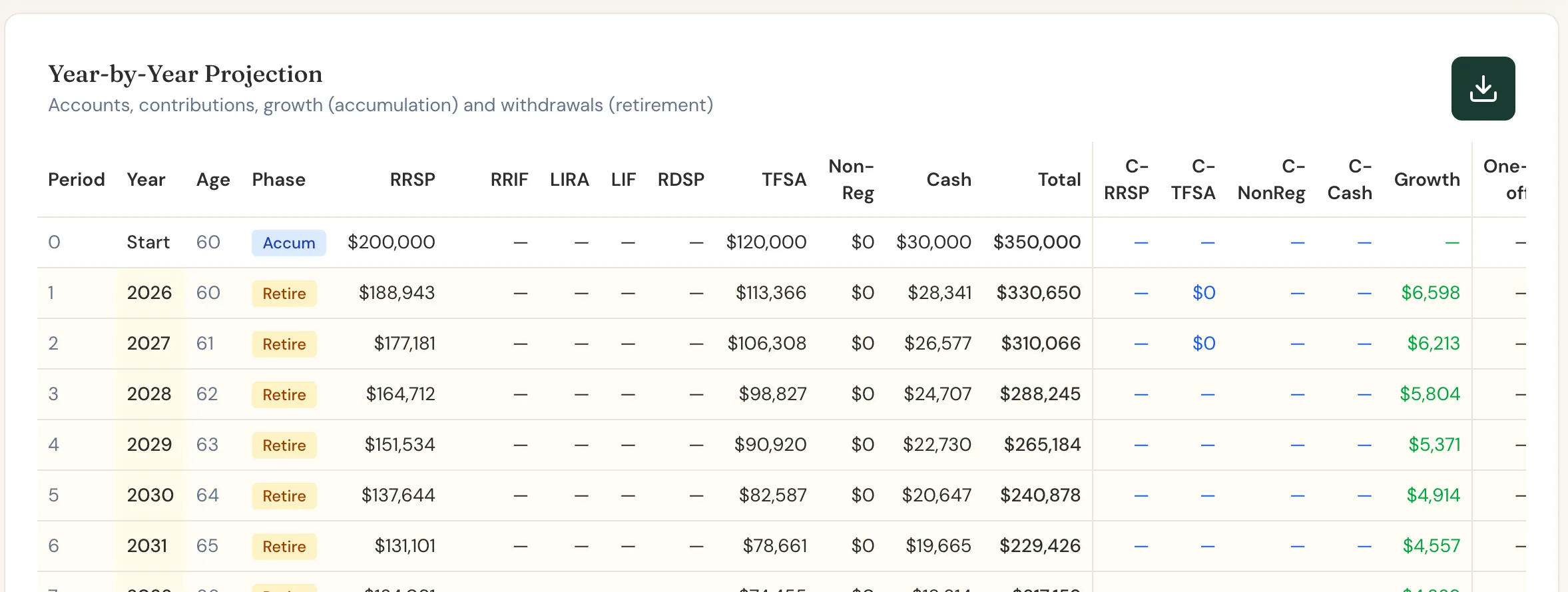 Year-by-year account balances from 60.
At 65, her bridge ends and CPP and OAS start. CPP and OAS pay $20,908 a year, more than the $7,800 bridge they replace.
From 65 on, her pension keeps shrinking in real terms, and her withdrawals from savings creep up to cover it.
At 81, her savings run out. Her pension, CPP, and OAS keep paying for life, but they no longer cover her budget.
Scenario Lab+'s Recommendations tab finds two fixes: spend $352 a month less, or work until 62.
But What If We Change the Assumptions?
4 versions of Angela's plan
One assumption changed in each. Charts show the portfolio from 60 to 95 in Scenario Lab+.
Angela's base plan
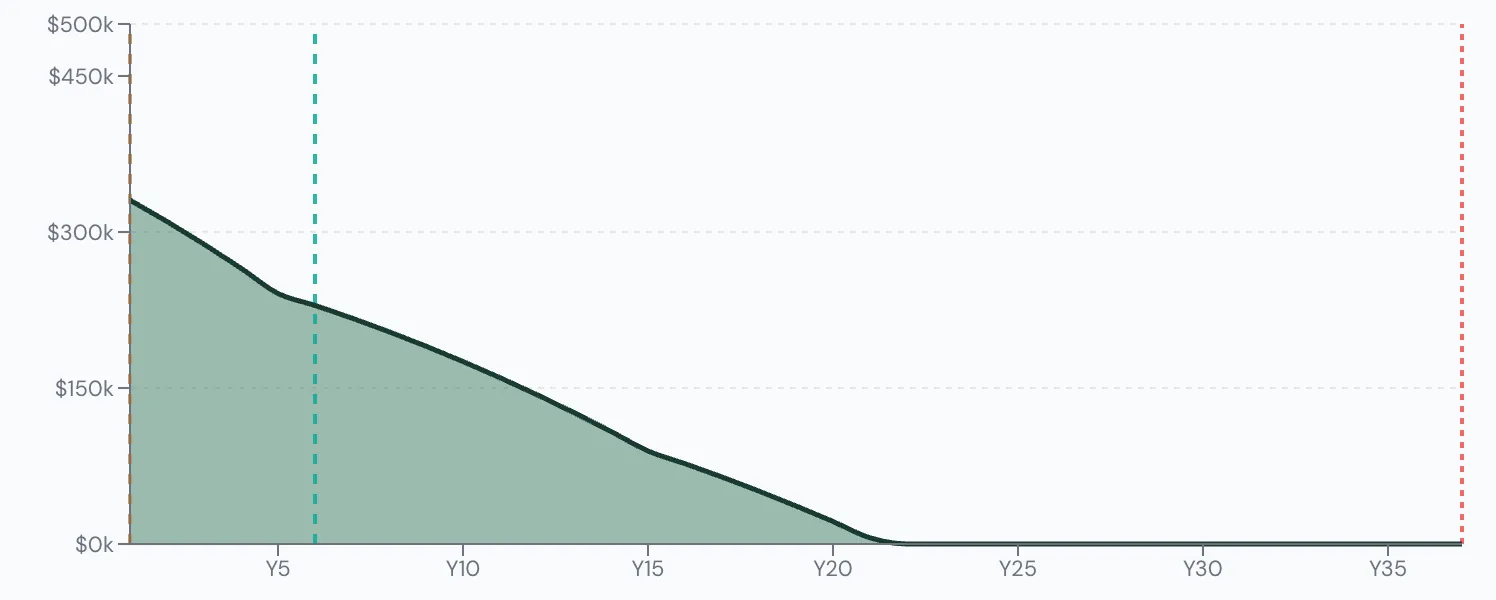
- Spends at 60
- $57,600/yr
- Money lasts
- To age 81
- Left at 95
- $0
Takes the commuted value instead
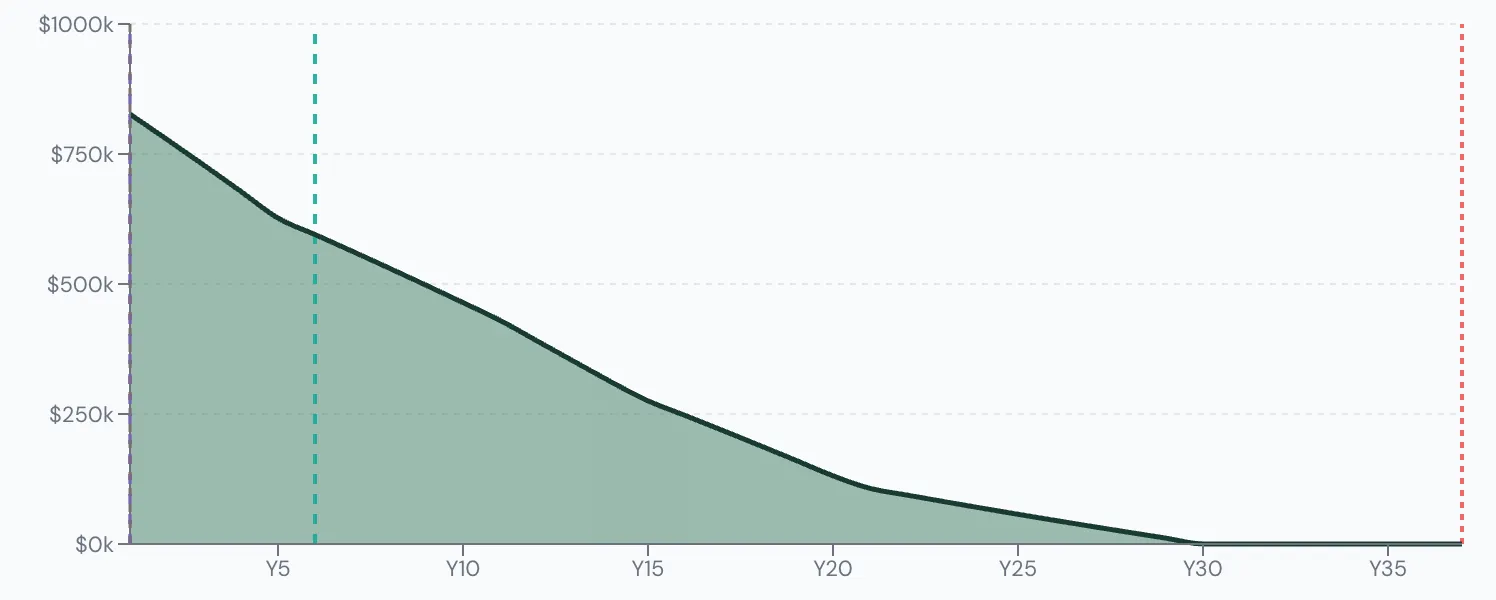
- Spends at 60
- $57,600/yr
- Money lasts
- To age 80
- Left at 95
- $0
Her pension is fully indexed
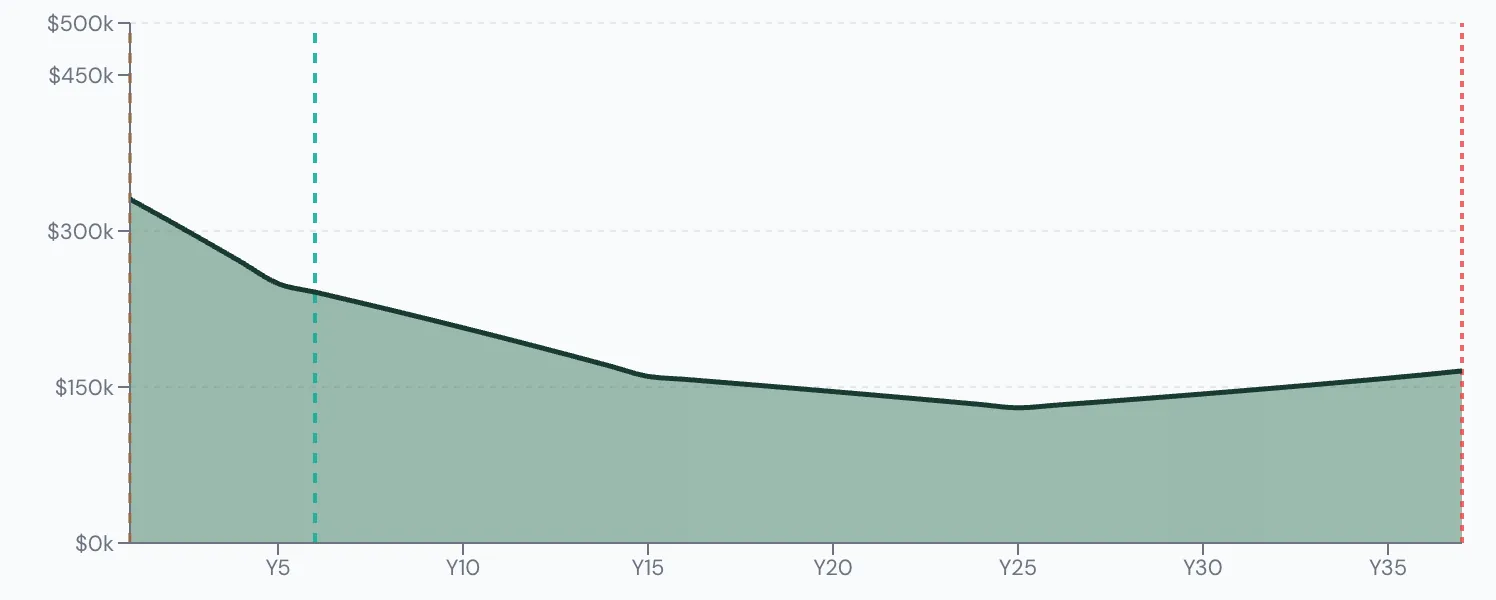
- Spends at 60
- $57,600/yr
- Money lasts
- Past 95
- Left at 95
- $161,852
Works two more years, to 62
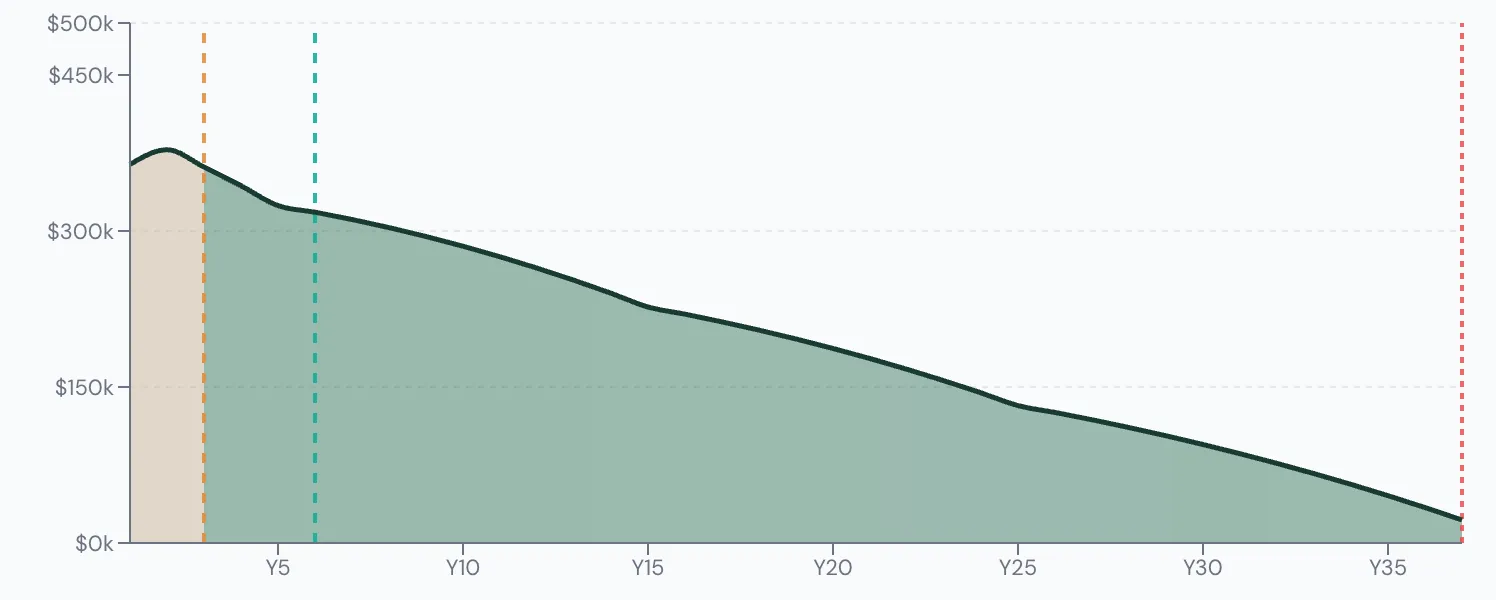
- Spends at 62
- $57,600/yr
- Money lasts
- Past 95
- Left at 95
- $34,074
Scenario 1
Her pension is fully indexed
- Spends at 60
- $57,600/yr
- Money lasts
- Past 95
- Left at 95
- $161,852
What if Angela's pension rose fully with inflation? Same $2,600 to start, but it keeps its buying power for life.
Her plan works, and she reaches 95 with $161,852. At 80 her pension and CPP and OAS still pay as much in real terms as they did at 65, and she barely touches her savings after 75.
That gap, between failing at 81 and $162,000 to spare, is the value of indexing. When you compare pension options, or a job with a pension against one without, how the pension is indexed matters as much as its starting amount.
Scenario 2
Takes the commuted value instead
- Spends at 60
- $57,600/yr
- Money lasts
- To age 80
- Left at 95
- $0
Angela can leave her pension behind and take its commuted value instead: a lump sum meant to equal the pension's worth today. We assumed about $550,000. Most of it, $480,000, can move tax-free into a locked-in account (a LIRA, which becomes a life income fund or LIF). The part above the tax-free transfer limit, $70,000 here, is paid in cash and taxed as income in the year she leaves. That's why her tax in her first year jumps to $32,491.
The result is almost the same as keeping the pension: her plan falls short at about 80 instead of 81. A LIF also has a yearly maximum withdrawal, so at 85 she still has about $45,000 in it but can't draw enough to meet her budget.
What the commuted value changes is who carries the risk. The pension pays for life however long she lives. The lump sum can run out, but whatever is left when she dies goes to her estate. Our guide to LIRAs and LIFs covers how locked-in accounts work.
Scenario 3
Works two more years, to 62
- Spends at 62
- $57,600/yr
- Money lasts
- Past 95
- Left at 95
- $34,074
What if Angela works two more years, as Scenario Lab+ recommends? Two more years of service raise her pension, and we assumed $2,780 a month from 62. She keeps saving into her TFSA, and her CPP rises slightly.
Her plan now lasts to 95, with $34,074 left. Two more years of work mean two fewer years of withdrawals, and a pension that starts higher.
Your Pension Is Not Angela's Pension
So can you retire at 60 with a pension? Angela nearly can, and two more years of work get her there. But her plan is a starting point, not an answer for anyone else.
Two pensions with the same starting amount can be worth very different things. Whether yours is indexed, and what you've saved beside it, can change the answer completely. For someone with no pension at all, see Michael's plan at 60.
The bigger risk with a pension is reading its starting amount as its value for life.
That's why we built Scenario Lab+.
It is the software behind every number in this article. Give it your own pension, accounts, and spending, and it builds the same year-by-year plan for you, including every what-if above. If you'd like to see it first, Angela's full plan is open to explore.

Build Your Own Canadian Retirement Plan
Enter your own pension, savings, and spending in Scenario Lab+ to see whether your number is enough and what happens when your assumptions change.
Start now