


The short answer
- Yes, just: $820,000 at 58, almost half of it in a LIRA, supports $4,300 a month to 90 for Kevin.
- The locked-in money isn't a problem day to day: the yearly LIF limits let him draw what he needs.
- It becomes one when he needs a lump sum. A $100,000 gift at 60 leaves him short at 74 with $162,000 still locked in his LIF.
Estimates from Scenario Lab+, in today's dollars.
See the demo planAnyone who has left a job with a pension may have a LIRA, a locked-in retirement account holding the value of that pension. The money is yours, but you can't take it out as you please. Once it becomes a life income fund (LIF), you can only withdraw between a yearly minimum and maximum. For someone with a lot of their savings locked in, the question is whether those limits get in the way.
Here at Loonie Nest, our mission is to provide free and affordable personal finance education to Canadians so they can gain confidence in their retirement.
Kevin's plan at a glance
$820,000
saved at 58
RRSP
$300,000
Taxed as income when withdrawn
TFSA
$140,000
Withdrawals are tax-free
Spending after tax, in today's dollars
$51,600
$46,440
$41,280
CPP $1,100 a month from 65
OAS $742 a month from 65
Our $800K Retirement Scenario
Let's meet Kevin. He's 58, single, and living in Edmonton, AB. He's a geologist who spent his early career at an oil company with a pension plan, left at 46, and moved the value of his pension into a LIRA. He spent the years since consulting. Now he wants to stop working, and almost half of what he has is locked in.
We'll run Kevin's numbers through Scenario Lab+.
Scenario Lab+ is our proprietary retirement planning software. We'll use it to generate and review a tailored retirement plan for him.
To start, here's how Kevin's numbers look as he retires at 58:
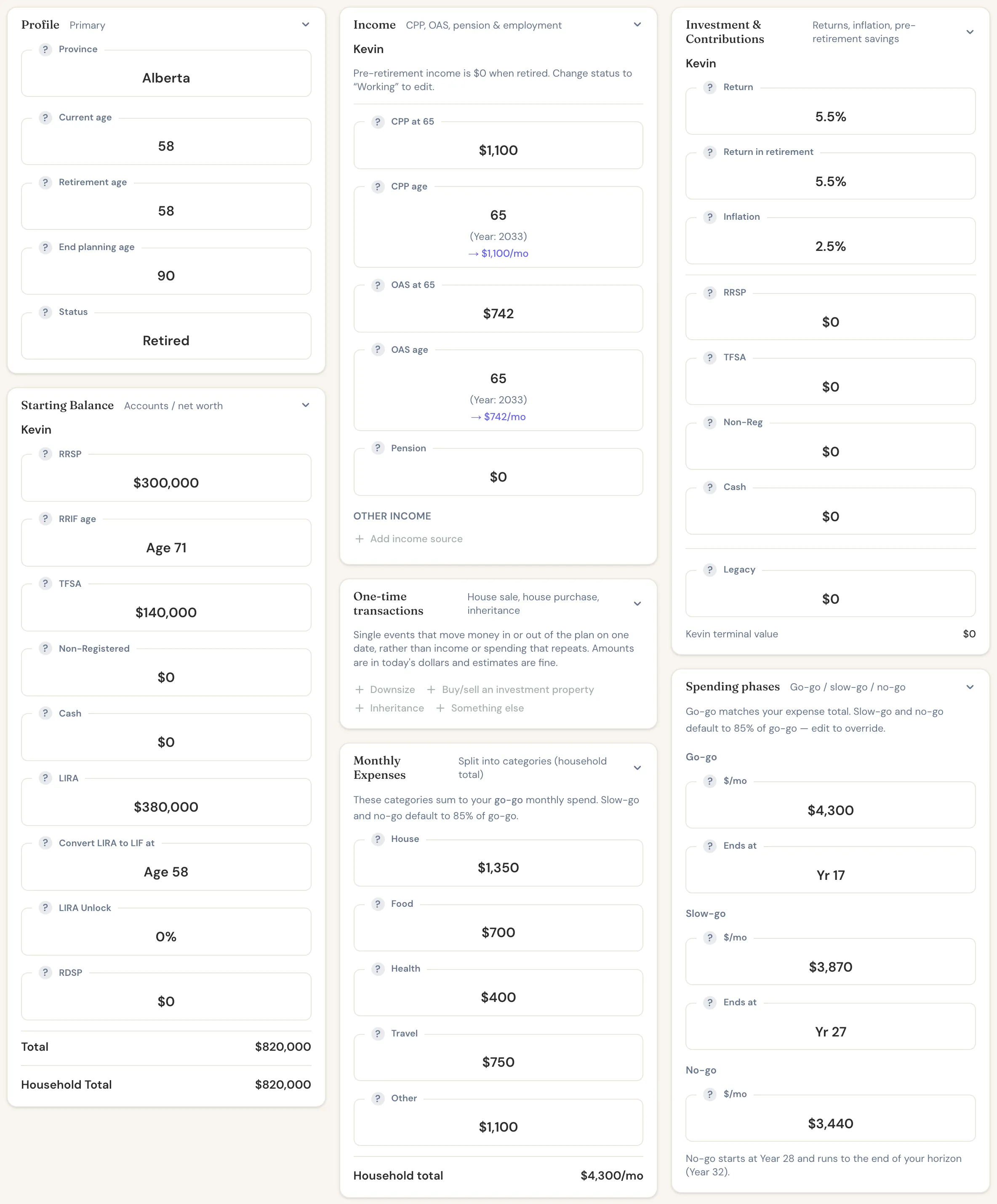 Kevin's plan inputs: his profile, accounts including his LIRA, CPP and OAS, and monthly spending.
$380,000 is locked in. He has $380,000 in his LIRA, $300,000 in his RRSP, and $140,000 in his TFSA, $820,000 in all.
He converts his LIRA to a LIF now. To draw on it, a LIRA has to become a LIF. Kevin converts his at 58, so it can pay him from the start. In Scenario Lab+, the LIF conversion age is an input, and the plan applies the LIF's yearly minimum and maximum.
Kevin's CPP is $1,100 a month at 65. Seven empty years before 65 bring the amount down. He gets the full OAS at 65. If you want a refresher on how both programs work, see our guide to CPP and OAS.
His spending falls as he ages. His plan starts at $4,300 a month and steps down at 75 and again at 85. In Scenario Lab+, these steps are the plan's Spending Phases.
A few other important assumptions: all figures are in today's dollars, Kevin owns his home with no mortgage, he expects his investments to grow 5.5% a year, inflation runs at 2.5% a year, and we plan his retirement to age 90.
Kevin's retirement budget
| Category | Monthly | Annual |
|---|---|---|
| Housing (property tax, utilities, insurance, upkeep) | $1,350 | $16,200 |
| Food and dining | $700 | $8,400 |
| Health and dental | $400 | $4,800 |
| Travel | $750 | $9,000 |
| Everything else (car, gifts, entertainment) | $1,100 | $13,200 |
| Total | $4,300 | $51,600 |
Is $800K Enough to Retire at 58?
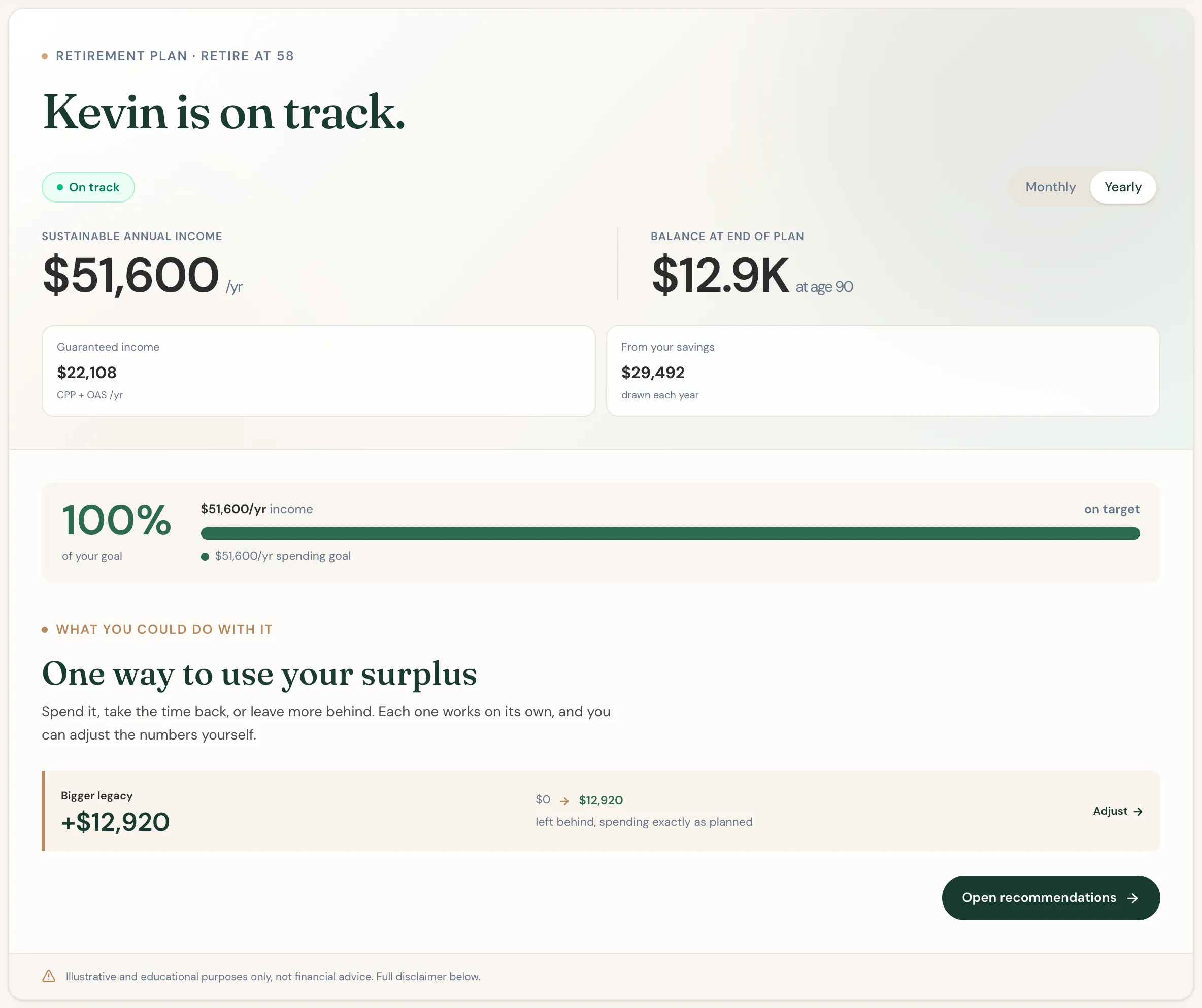 Scenario Lab+'s results for Kevin's plan.
For Kevin, the results say yes, with almost nothing to spare. His plan covers his spending every year and has $12,920 left at 90. Scenario Lab+ estimates $4,300 a month is about the most he can spend.
He draws $57,992 from his savings in his first year, about 7% of his portfolio, which is high. It works because his spending falls at 75 and 85, and from 65 his CPP and OAS pay $22,108 a year.
How His LIF Fits In
In his first year, Kevin draws from all three accounts:
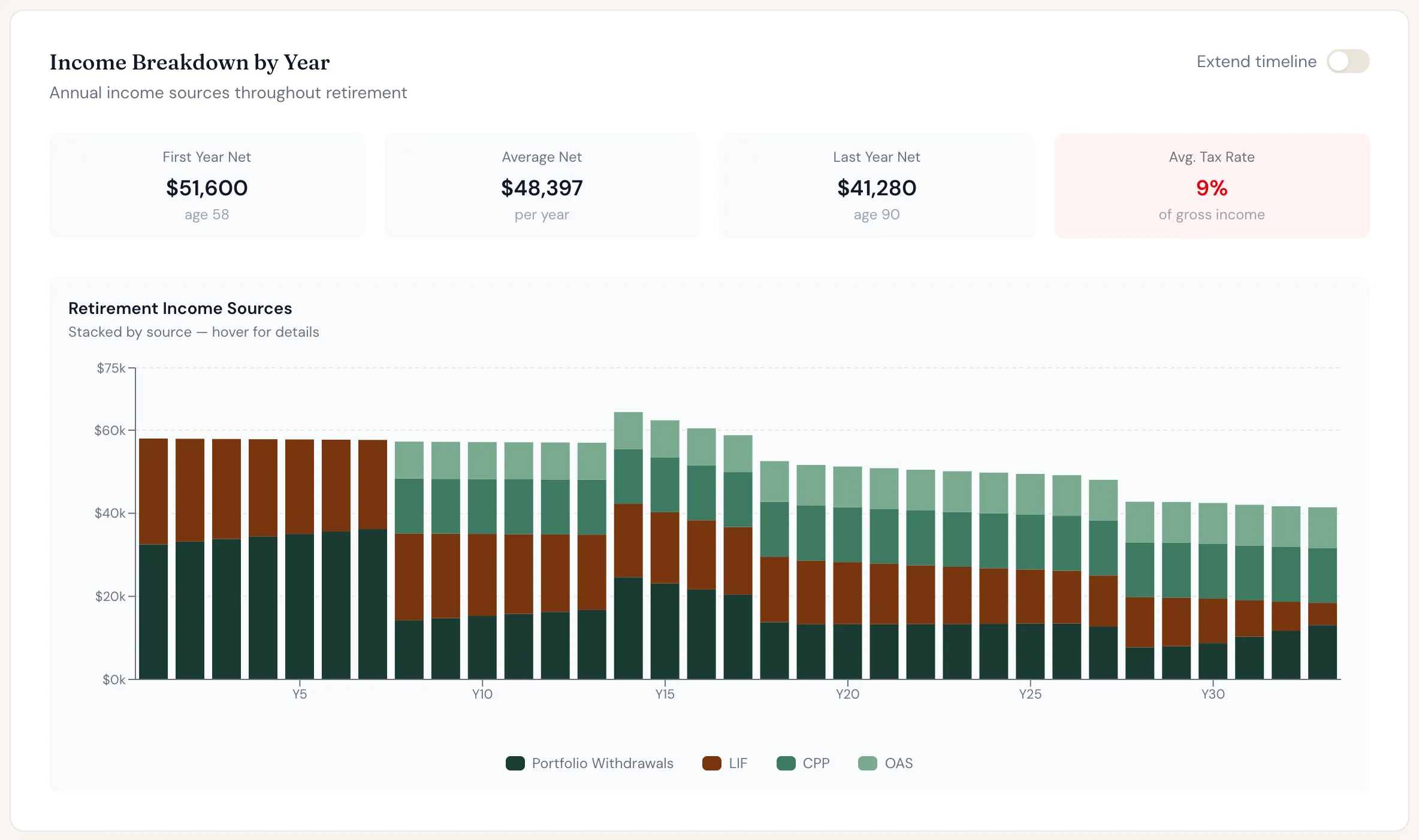 Where Kevin's income comes from each year, by source.
| Source | Age 58 | Age 65 | Taxable? |
|---|---|---|---|
| CPP | $0 | $13,200 | Yes |
| OAS | $0 | $8,908 | Yes |
| LIF withdrawals | $25,460 | $20,884 | Yes |
| RRSP withdrawals | $22,181 | $9,720 | Yes |
| TFSA withdrawals | $10,351 | $4,536 | No |
| Gross income | $57,992 | $57,248 | |
| Income tax | $6,392 | $5,648 | |
| Spending money | $51,600 | $51,600 |
At 58, his LIF pays him $25,460, inside the yearly limits. The maximum leaves enough room that, at this budget, he never needs more from his LIF than it allows. For Kevin, day to day, the lock-in doesn't bite.

Have money in a LIRA or LIF?
Scenario Lab+ applies your LIF's yearly minimum and maximum, and shows what unlocking would change, year by year.
Try Scenario Lab+How Much Tax Kevin Pays
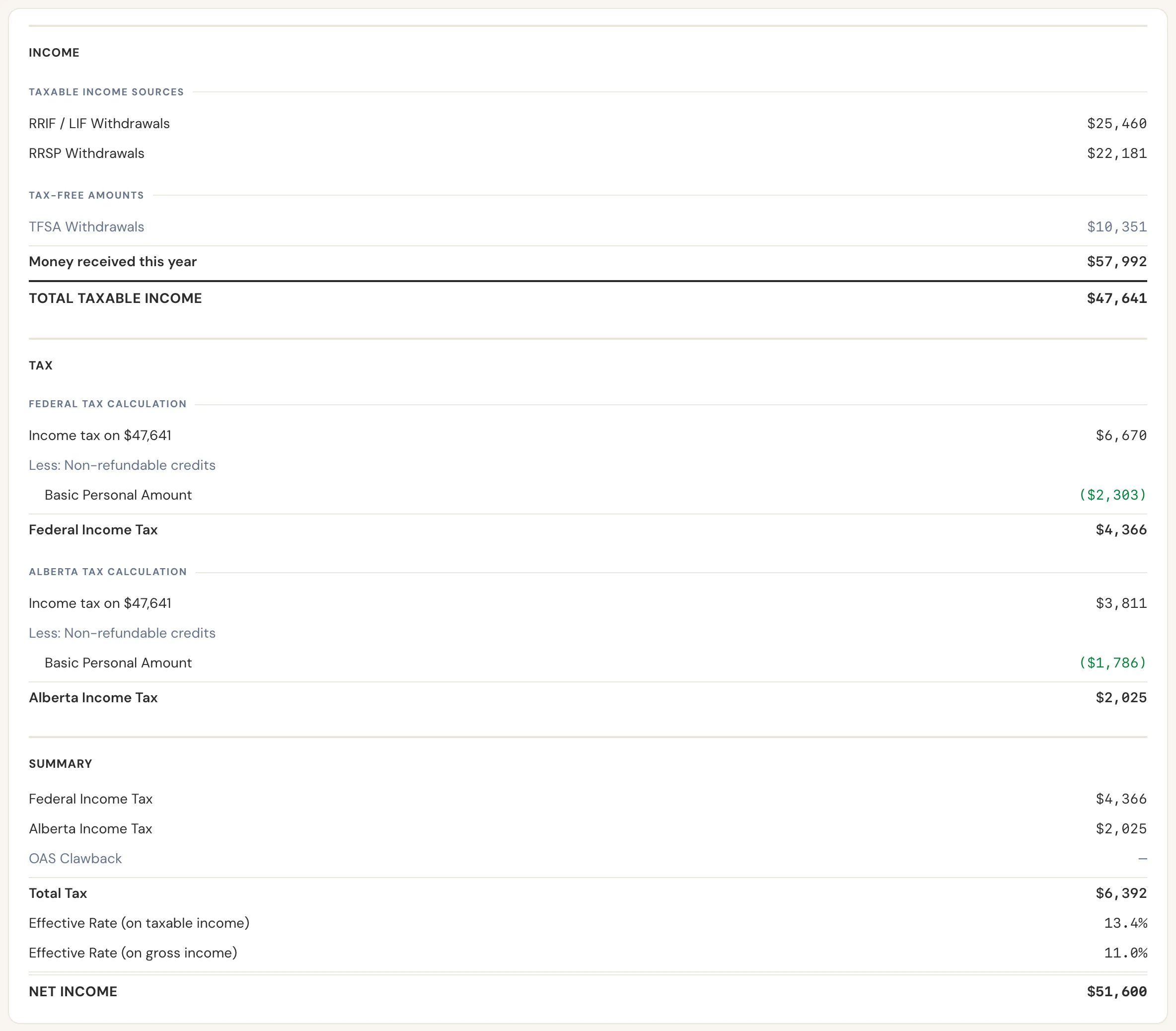 Kevin's tax bill in his first year of retirement, at age 58.
Kevin pays $6,392 in income tax in his first year, about 11% of his income. LIF withdrawals are taxed as income, like RRSP withdrawals. Over his whole retirement he pays $152,819.
How His Plan Changes Over Time
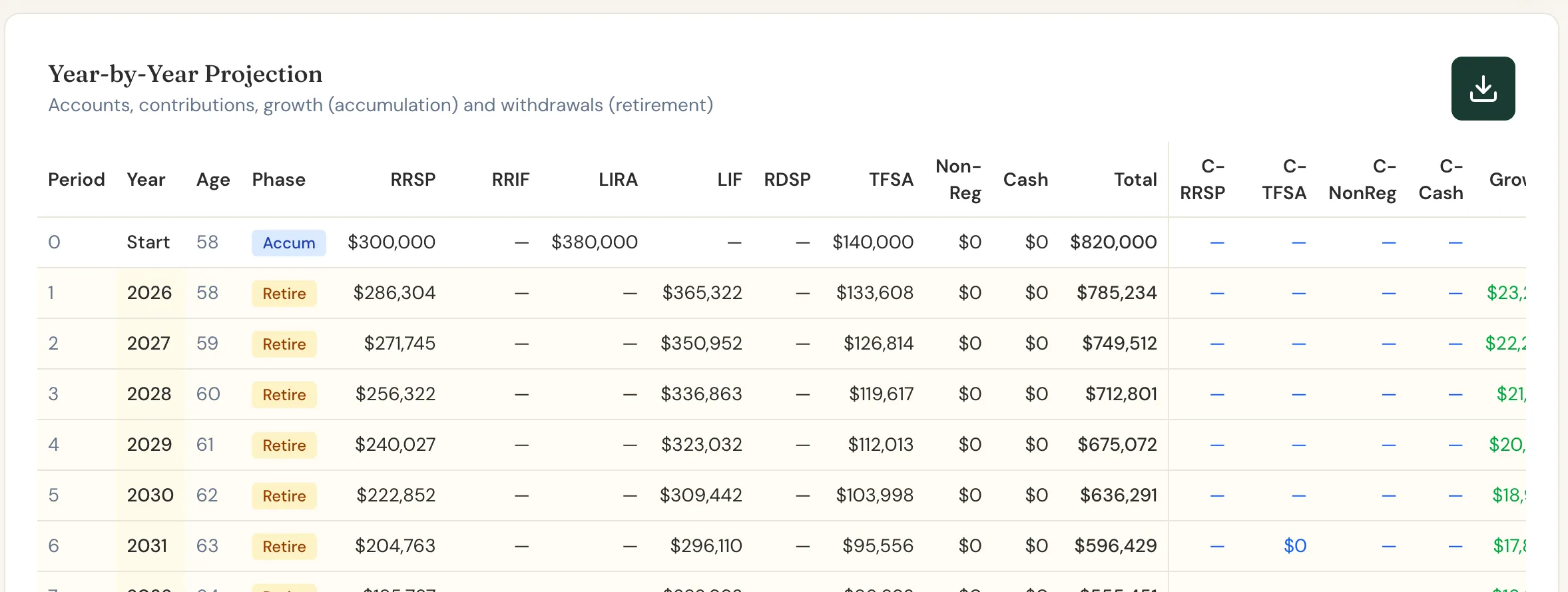 Year-by-year account balances from 58.
From 58 to 64, everything comes from his savings. His portfolio falls from $820,000 to about $555,000.
At 65, CPP and OAS start. His withdrawals from savings fall by about 40%.
At 71, his RRSP becomes a RRIF. The RRIF minimum takes out more than he needs that year, and the extra goes to his TFSA. Our RRIF guide covers the rules.
At 90, he has $12,920 left.
But What If We Change the Assumptions?
Kevin's plan works as long as he only ever needs a steady monthly income. We tested what happens when he needs a lump sum, and whether Alberta's unlocking rules help.
4 versions of Kevin's plan
One assumption changed in each. Charts show the portfolio from 58 to 90 in Scenario Lab+.
Kevin's base plan
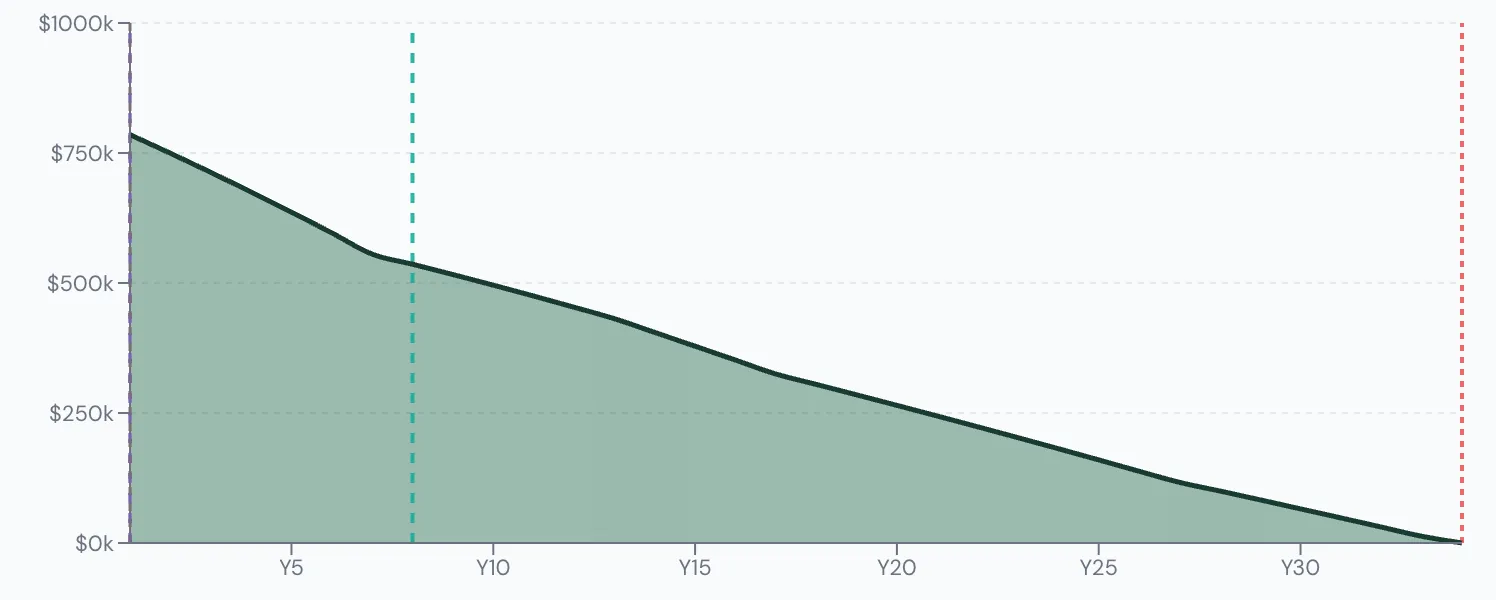
- Spends at 58
- $51,600/yr
- Money lasts
- Past 90
- Left at 90
- $12,920
Gives his son $100,000 at 60
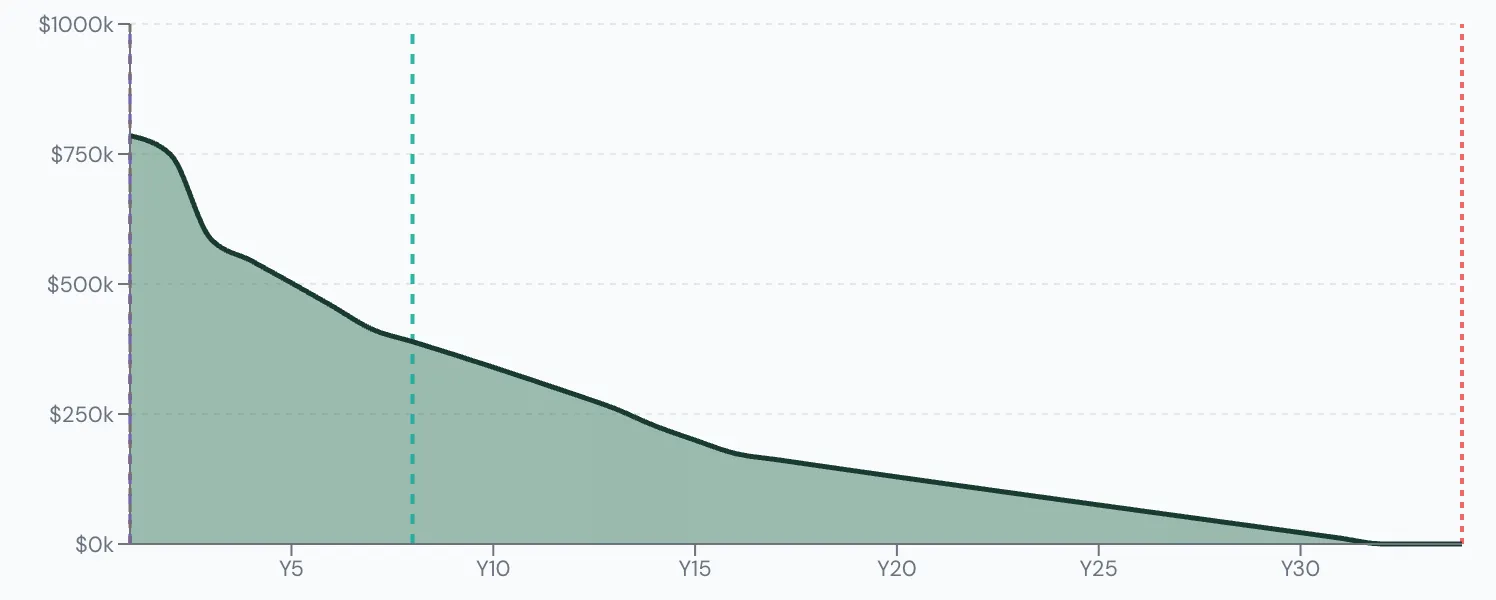
- Spends at 58
- $51,600/yr
- Money lasts
- To age 74
- Left at 90
- $0
Unlocks half his LIRA, then gives $100,000
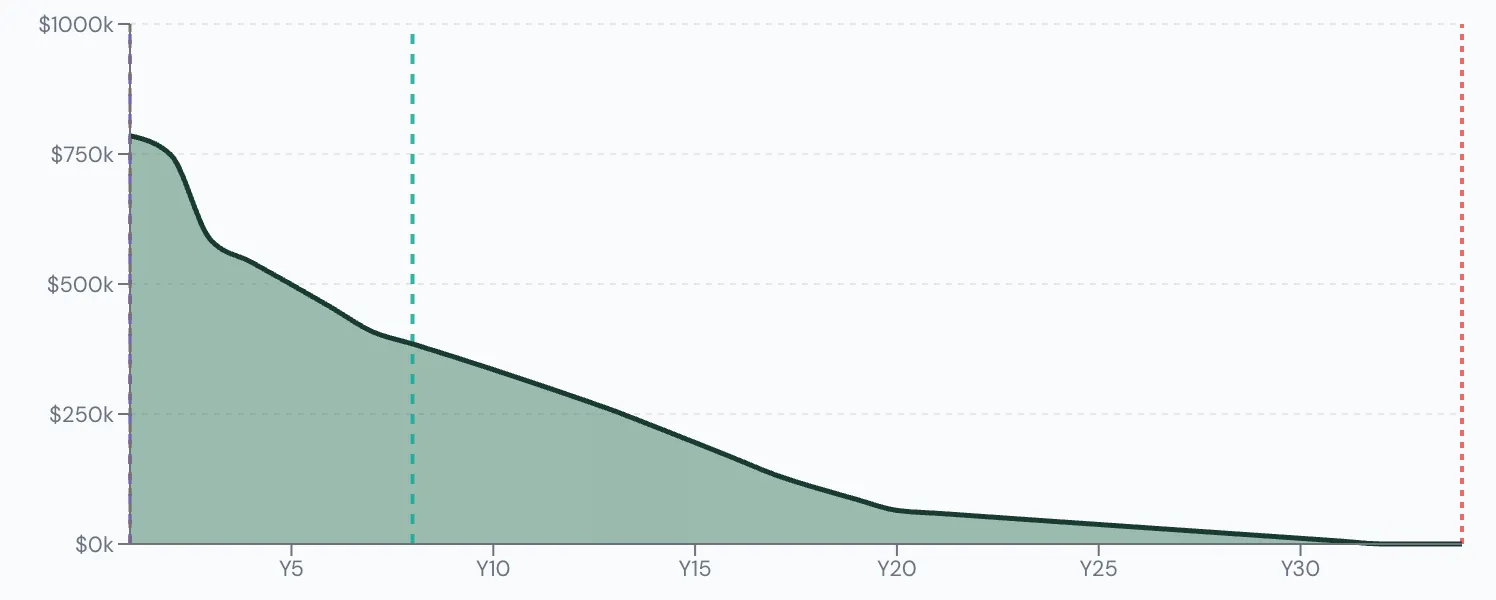
- Spends at 58
- $51,600/yr
- Money lasts
- To age 78
- Left at 90
- $0
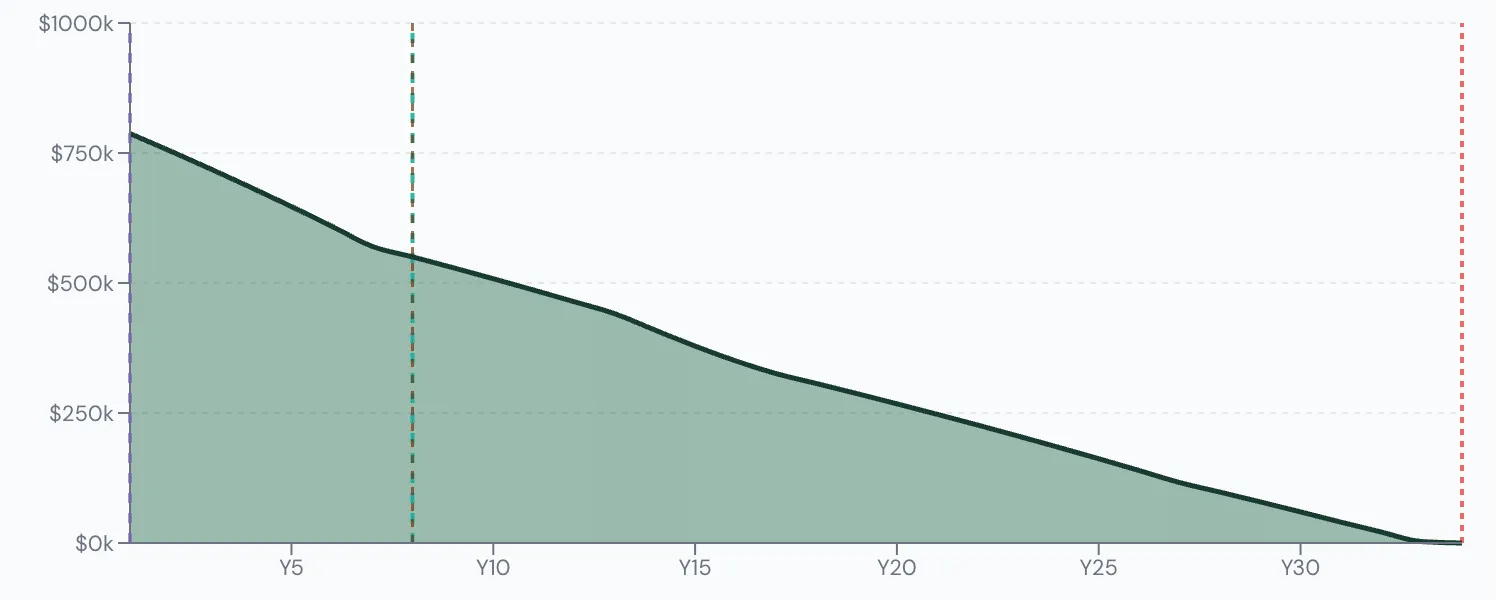
Leaves his LIRA locked until 65
- Spends at 58
- $51,600/yr
- Money lasts
- Past 90
- Left at 90
- $2,706
Scenario 1
Gives his son $100,000 at 60
- Spends at 58
- $51,600/yr
- Money lasts
- To age 74
- Left at 90
- $0
What if Kevin gives his son $100,000 at 60 toward a home? A LIF can't pay a lump sum above its yearly maximum, so the gift has to come from his other accounts: $60,000 from his RRSP and $40,000 from his TFSA. We modelled it with the One-Time Transactions feature in Scenario Lab+.
The RRSP withdrawal is taxable, so his tax in that year jumps from $6,275 to $29,189. Then the real cost arrives later. By 74 his RRSP and TFSA are empty, and his LIF still holds $162,456. But the LIF can only pay out so much a year, and his income falls from $51,600 to $36,120. Scenario Lab+ marks his plan as falling short at 74, with money he can't reach.
That's the trap with locked-in money: the risk isn't running out, it's running out of everything else.
Scenario 2
Unlocks half his LIRA, then gives $100,000
- Spends at 58
- $51,600/yr
- Money lasts
- To age 78
- Left at 90
- $0
Alberta lets someone 50 or older unlock up to half of a LIRA, once, when they convert it to a LIF. The unlocked money can go to an RRSP or RRIF without tax at the time, according to Alberta's guide to accessing pension funds. It's a one-time choice: if you unlock less than half, you can't unlock more later. A spouse or common-law partner may need to sign a waiver. Rules differ by province, and for federally regulated pensions.
What if Kevin unlocks half at 58, moving $190,000 into his RRSP, and then gives the same $100,000?
His plan still falls short, but four years later, at 78. Unlocking lets him reach his money when he needs it. It doesn't give him more of it: the gift still costs him $100,000 plus the tax on taking it out of his RRSP.
For Kevin, unlocking is worth doing at 58 for the flexibility, even if he never needs it. It's also a one-time decision, which Scenario Lab+ lets him test before making it. Our guide to LIRAs and LIFs covers the rules in more detail.
Scenario 3
Leaves his LIRA locked until 65
- Spends at 58
- $51,600/yr
- Money lasts
- Past 90
- Left at 90
- $2,706
What if Kevin leaves his LIRA locked until 65, and lives on his RRSP and TFSA until then? Some people do this to let the locked-in money keep growing.
It barely works. He draws $55,895 a year from his RRSP and TFSA from 58 to 64, and by 65 they're down to about $106,000. From then on almost everything comes from his LIF, and he reaches 90 with $2,706. He pays about $14,000 more tax over his retirement, because more of his income lands later, on top of CPP and OAS.
Converting at 58 gives him more room, because the LIF starts paying while his other accounts are still full.
Your LIRA Is Not Kevin's LIRA
So can you retire at 58 with $800,000 and a LIRA? Kevin can, just. But his plan is a starting point, not an answer for anyone else.
How much of your money is locked in, and whether you'll ever need a lump sum, can change the answer completely. So can your province's rules. For someone with the same savings and none of it locked in, see Nicole's plan at 55. For someone deciding whether to take a pension or its commuted value, see Angela's plan.
The bigger risk with locked-in money is finding out it's locked when you need it.
That's why we built Scenario Lab+.
It is the software behind every number in this article. Give it your own LIRA, accounts, and spending, and it builds the same year-by-year plan for you, including every what-if above. If you'd like to see it first, Kevin's full plan is open to explore.

Build Your Own Canadian Retirement Plan
Enter your own savings, LIRA, benefits, and spending in Scenario Lab+ to see whether your number is enough and what happens when your assumptions change.
Start now